• What We Grow
    • Growing Practices
    • The Farmers
    • Jobs
    • In the News
    • Contact
    • CSA Options
    • Photo Tour of the CSA
    • Member Guide
    • FAQs
  • Barrett's Bucks
  • PYO Flowers
  • Farm Stand
  • Blog
  • Sign Up
Menu

Barrett's Mill Farm | CSA & Farm Store

449 Barretts Mill Rd
Concord, MA, 01742
978-254-5609

Your Custom Text Here

Barrett's Mill Farm | CSA & Farm Store

  • About
    • What We Grow
    • Growing Practices
    • The Farmers
    • Jobs
    • In the News
    • Contact
  • CSA
    • CSA Options
    • Photo Tour of the CSA
    • Member Guide
    • FAQs
  • Barrett's Bucks
  • PYO Flowers
  • Farm Stand
  • Blog
  • Sign Up

CSA Week 6 and Farm stand updates

July 14, 2026 Lise Holdorf

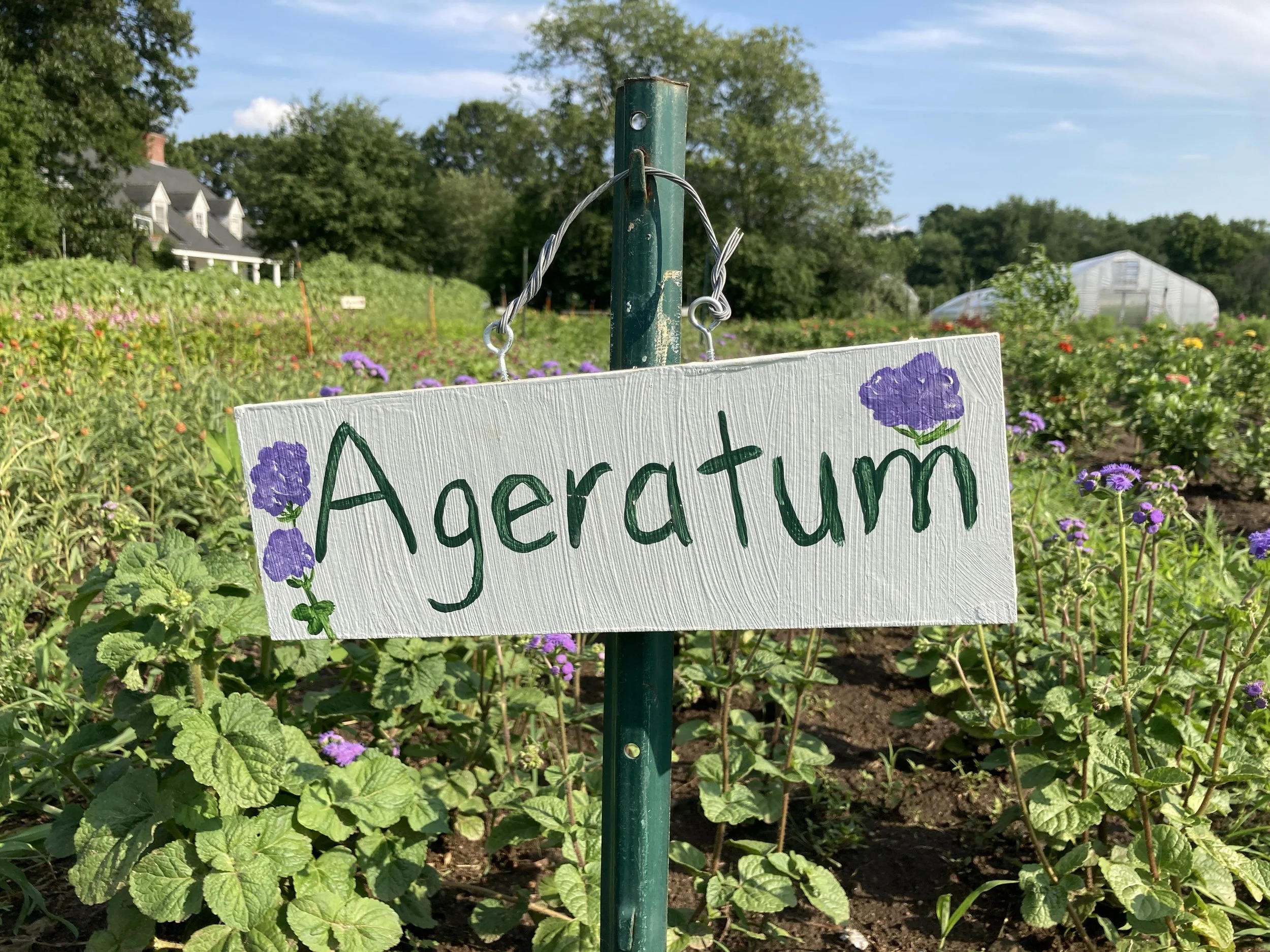
A few more varieties are open in the PYO flower field this week, which means that we get to start breaking out some of the beautiful signs that Rebecca painted over the winter!

One of the big tasks for the week is going to be starting the garlic harvest. We pull the whole garlic plants from the ground (frequently using pitchforks to loosen the soil), and then bring them in to the farm stand to cure. Curing is a process of drying out the garlic for a couple of weeks, and the result is a stronger flavor and longer lasting storage. Most of the garlic will be cured in the farm stand by folding the stalks of the garlic plant over and hanging on wires strung across the ceiling (alongside some dried flowers that are already hanging there). When we run out of space in the farm stand, some will go into the greenhouse to cure, and the rest will be distributed in the coming weeks as uncured garlic (which is milder and moister). Not all of the cured garlic will get eaten, as we set aside the largest 25% of heads as seed for the following season. So the garlic harvest we are beginning now is the first step towards next year’s garlic!

In the CSA this week:

  • Fresh onions - Mixed bunches of Red Long of Tropea and Ailsa Craig varieties. Both types are milder and sweeter than cured onions.

  • Green peppers

  • Cucumbers - Slicers, picklers or thin-skinned, grown in our high tunnel and in the field.

  • Zucchini

  • Summer squash - We are still experiencing deer damage on the summer squash, so we only have enough for the Regular size CSA.

  • Celery - Our celery is smaller, but less watery (and therefore a stronger flavor) than what you typically find in the grocery store.

  • Carrots

  • Beets

  • Garlic scapes - Last week!

  • Scallions

  • Fennel

  • Cabbage - Savoy, arrowhead (also known by the name of the variety we grow, which is called Caraflex), and regular round green cabbage.

  • Mini daikon radish - Last week!

  • Curly kale

  • Lettuce

  • Salanova lettuce mix

CSA Pick-Your-Own:

  • Sunflowers

  • Herbs: Basil, Thai basil, dill flowers, parsley, sage, mint, thyme, chives

In the farm store:

Farm store hours are Tuesday-Friday 11am-6pm and Saturday 9am-3pm. In addition to most of the items listed in the CSA above, we will have:

  • Tomatoes - These are the first heirlooms and slicers of the season from the high tunnel, so we’ll have very limited availability to start.

  • Cherry tomatoes - Sukura variety (red) from the high tunnel.

  • Flowers - Snapdragon bouquets and Rudbeckia bouquets. Catherine is on much deserved vacation this week, and we are not skilled enough to make mixed bouquets that could rival hers!

  • Broccolini

  • Sweet corn! From Verrill Farm in Concord. Not organic

  • Salsa Verde - Made by Kenneth at Eastern Mass Provision from our own organic tomatillos, onions, garlic, jalapeños and cilantro. Mild.

  • Hot Sauce - Made by Kenneth at Eastern Mass Provision from our own organic habañeros, aji rico, fresno, cayenne, Hungarian hot wax and garlic. Hot.

  • Seasonal Medley Mushrooms and Shiitake Mushrooms - From Mycoterra Farm in Deerfield, MA. Certified organic. Starting on Wednesday.

  • Baer’s Best Beans - Black Turtle, Italian Cranberry, and Cannellini are Certified Organic. Bumblebee and Black Coco are not organic. Grown by Charley Baer in South Berwick, ME.

  • Maple syrup - 12 oz. bottles from our friend Jim at Hollis Hills Farm in Fitchburg, MA. Not Organic.

  • Raspberry Vinegar Infusion -Silferleaf Farm in Concord, MA. Certified Organic.

PYO Flower Field

The flower field is open to both PYO Flower CSA members and the general public for picking by the jar. Please check in at the farm stand before picking. Flowers available for picking this week include: snapdragons, scabiosa, orlaya, dill flowers, ammi, gomphrena, ageratum, cosmos, zinnias and rudbeckia. There may be other varieties available as the week goes on, but please do not pick from plantings that don’t have a variety sign in front of them.

When picking, please cut above branching points so that we can continue to get blooms all season (if they are cut to the base the plant can’t produce anymore flowers). This means that this time of year some varieties need to be picked with shorter stems, particularly the zinnias that are just beginning to bloom.

White Bean, Feta and Quick-Pickled Celery Salad 

By Hetty Lui McKinnon, from NY Times Cooking

Ingredients

Yield: 4 to 6 servings

  • 4 celery stalks, trimmed and thinly sliced

  • ½ small red onion, thinly sliced

  • ¼ cup white or red wine vinegar

  • 1 tablespoon sugar

  • 1 teaspoon cumin seeds (optional) 

  • Salt and pepper

  • 2 (15-ounce) cans cannellini beans, rinsed

  • 7 to 8 ounces crumbled feta

  • 1 cup chopped tender herbs, such as mint, parsley, cilantro, dill or a mix 

  • ¼ cup extra-virgin olive oil

Preparation

  1. Place the celery and red onion in a large bowl. Add the vinegar, sugar, cumin seeds (if using) and about ½ teaspoon of salt. Toss well to combine, then set aside to pickle for 15 minutes.

  2. Add the cannellini beans, feta and herbs to the celery and red onion. Drizzle with the olive oil, season well with salt and pepper and toss well to combine. Serve at room temperature. (The salad can be prepared and refrigerated up to 1 day in advance.)

Okonomiyaki

from Love & Lemons

Ingredients

  • 3 packed cups finely shredded cabbage, about ½ medium*

  • 1¼ cups chopped scallions, about 1 bunch

  • 1 cup panko breadcrumbs

  • ¾ teaspoon sea salt

  • 3 large eggs, beaten

  • Extra-virgin olive oil, for brushing

For serving

  • Vegan Worcestershire sauce, Annie’s recommended

  • Mayo, Sir Kensington’s or Kewpie recommended

  • Sesame seeds

  • Pickled ginger

  • ½ sheet nori, sliced**

  • ½ cup microgreens, optional

Instructions

  • In a large bowl, combine the cabbage, scallions, panko, and salt. Gently mix in the eggs. (Note: the mixture will be very loose and cabbagey, not like a flour pancake batter. If it's very dry, let it sit for 10 minutes).

  • Heat a nonstick skillet over medium heat. Brush the skillet with olive oil and use a ¼ measuring cup to scoop the cabbage mixture into the skillet. (It's ok if it doesn't seem cohesive, it'll bind together as the egg cooks). Flatten gently with a spatula so that the mixture is about 1/2 inch thick. Cook for 3 minutes per side, or until browned, turning the heat to low as needed. Repeat with the remaining mixture, wiping out the skillet and brushing with more oil as needed.

  • Drizzle the okonomiyaki with Worcestershire sauce and thin strips of squeezed mayo. Top with sesame seeds, pickled ginger, and nori. Sprinkle with microgreens, if desired. Serve hot.

Notes

*Shred cabbage on a mandoline to get thin, even-sized shreds.

**Use scissors to cut nori into thin strips.
CSA Week 5, Farm stand updates and PYO Flowers

July 7, 2026 Lise Holdorf

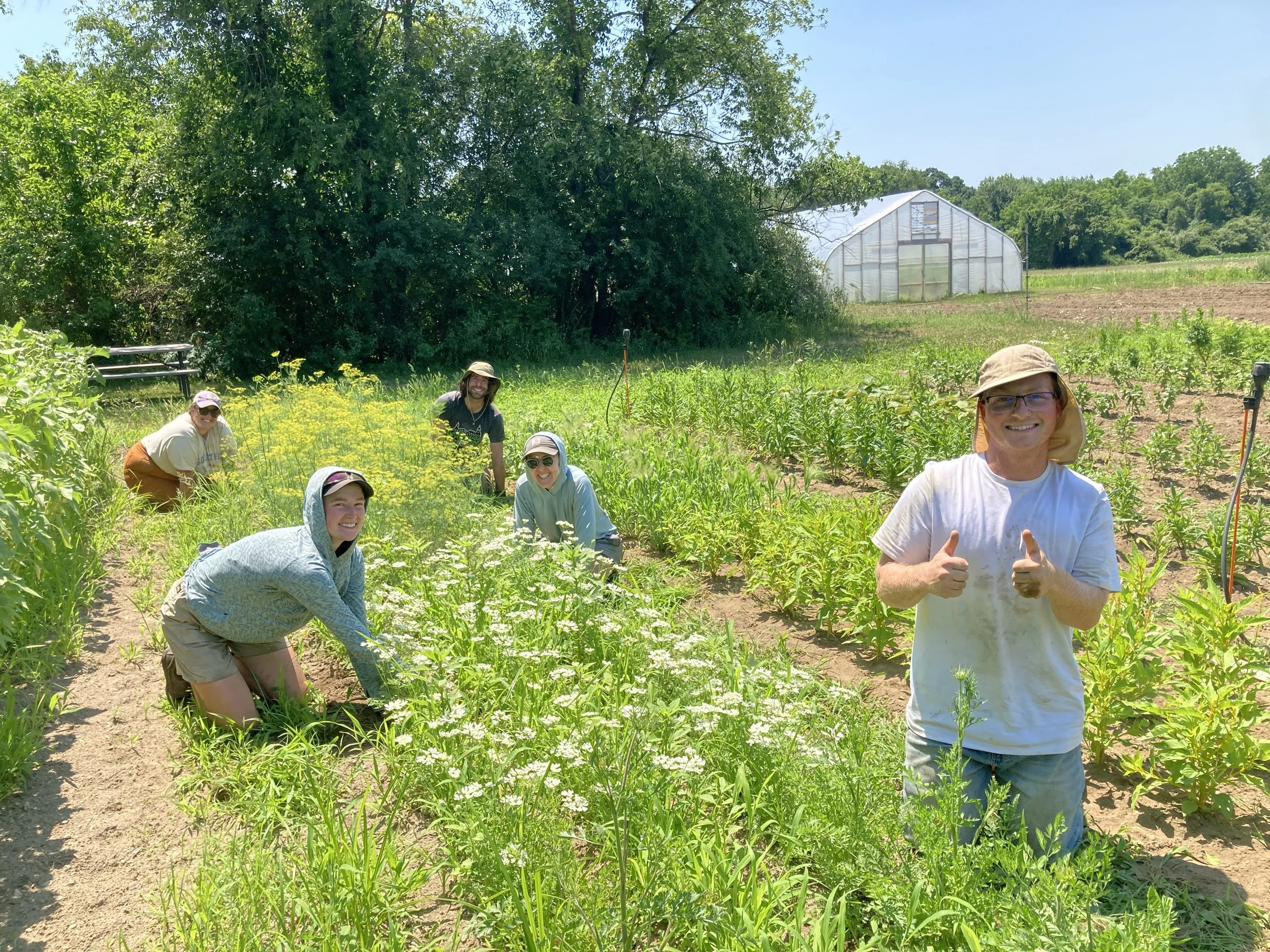
The field crew weeded the flower garden last week in preparation for opening the PYO field this week.

Our crew were champs working in the heat last week, and in general fared better than some of our more tender crops. In particular, one succession of greens and one succession of lettuce got burnt to a crisp. We irrigated all of our crops from dawn to dusk using both of our irrigation wells, but the heat in combination with our very sandy soil was just too much for some of them. Fortunately, we plant lettuce and salad greens every week, so this won’t have a major long-term impact. Maybe next time we should try giving the arugula a shady midday popsicle break! The Tuesday rain is a huge relief after last week’s heat wave, but it’s going to take a lot more in the coming weeks to pull us out of a Level 3 Critical Drought.

With a flush of colorful snapdragons coming on, we are opening the PYO Flower field this week during regular farm store hours. If you are not a PYO Flower CSA member (a few memberships still available!), picking is $17/bouquet (bouquets are picked into a wide-mouth quart jar). Jars are available in the farm stand for purchase, or you may borrow a jar and return it after you have finished picking. Currently, the snapdragons are the dominant flower available, so if you’d like a wider variety in your bouquet, you might want to wait a week or two before picking. We have a list of what flowers are available below the CSA and farm store lists, and we’ll update that list every week.

Housing update: Construction on the apartment addition is planned to start later this month! Melissa and her family are still looking a place to stay for 3 months (August-October) that is affordable and welcomes a 3 year old so if you have any leads please reach out!

In the CSA this week:

  • Cucumbers - Slicers and thin-skinned, grown in our high tunnel and in the field.

  • Zucchini - We are flush this week, so we’ve included a couple of zucchini recipes this week.

  • Celery - Our celery is smaller, but less watery (and therefore a stronger flavor) than what you typically find in the grocery store.

  • Carrots - Back to just orange carrots this week.

  • Beets

  • Garlic scapes - These are essentially the flower stalks of garlic plants and can be used much like regular garlic (it’s just a milder flavor). We have a good supply this week, but they won’t last forever, so we’ve included a few new recipe ideas below!

  • Scallions

  • Fennel

  • Cabbage - Savoy, arrowhead (also known by the name of the variety we grow, which is called Caraflex), and regular round green cabbage.

  • Mini daikon radish

  • Chard

  • Curly kale

  • Lettuce

  • Salanova lettuce mix

CSA Pick-Your-Own:

  • Sunflowers!

  • Herbs: Basil, Thai basil, dill flowers, parsley, sage, mint, thyme, chives

In the farm store:

Farm store hours are Tuesday-Friday 11am-6pm and Saturday 9am-3pm. In addition to most of the items listed in the CSA above, we will have:

  • Tomatoes - These are the first heirlooms and slicers of the season from the high tunnel, so we’ll have very limited availability to start.

  • Cherry tomatoes - From the high tunnel. Production is picking up a little, so we’re hoping to begin to have them more consistently.

  • Peppers - Available at the end of the week! Mostly green with a few purple.

  • Pickling cucumbers

  • Summer squash - As if to add insult to injury after all this heat, the summer squash plants are getting demolished by deer (both the foliage and the tiny squashes), so we only have them in the store this week.

  • Mustard greens

  • Flowers - We will have both snapdragon and mixed variety bouquets all week.

  • Salsa Verde - Made by Kenneth at Eastern Mass Provision from our own organic tomatillos, onions, garlic, jalapeños and cilantro. Mild.

  • Hot Sauce - Made by Kenneth at Eastern Mass Provision from our own organic habañeros, aji rico, fresno, cayenne, Hungarian hot wax and garlic. Hot.

  • Seasonal Medley Mushrooms - From Mycoterra Farm in Deerfield, MA. Certified organic.

  • Shiitake Mushrooms - From Mycoterra Farm in Deerfield, MA. Certified organic.

  • Dried Mushrooms - 1 oz dried shiitake mushrooms from Mycoterra Farm in Deerfield, MA. Certified organic.

  • Baer’s Best Beans - Black Turtle, Italian Cranberry, and Cannellini are Certified Organic. Bumblebee and Black Coco are not organic. Grown by Charley Baer in South Berwick, ME.

  • Maple syrup - 12 oz. bottles from our friend Jim at Hollis Hills Farm in Fitchburg, MA. Not Organic.

  • Raspberry Vinegar Infusion -Silferleaf Farm in Concord, MA. Certified Organic.

PYO Flower Field

The flower field is open to both PYO Flower CSA members and the general public for picking by the jar. Please check in at the farm stand before picking. Flowers available for picking this week include: snapdragons, orlaya, dill flowers, ammi and rudbeckia. As we mentioned above, snapdragons are the dominant flower available, so if you’d like a wider variety in your bouquet, you might want to wait a week or two before picking.

Zucchini Bread

by Sally McKenney, from Sally’s Baking Addiction

Ingredients

  • 1 and 3/4 cups (220g) all-purpose flour (spooned & leveled)

  • 1 teaspoon baking powder

  • 1/2 teaspoon baking soda

  • 1/2 teaspoon salt

  • 1 and 1/2 teaspoons ground cinnamon

  • 1/4 teaspoon ground nutmeg

  • 1/2 cup (120ml) vegetable oil (or melted coconut oil)

  • 1/2 cup (100g) packed light or dark brown sugar

  • 1/2 cup (100g) granulated sugar

  • 2 large eggs, at room temperature

  • 1/4 cup (60g) unsweetened applesauce (or sour cream or Greek yogurt)

  • 2 teaspoons pure vanilla extract

  • 1 and 1/2 cups (180g) shredded zucchini (no need to blot)

  • optional: 1 cup (180g) semi-sweet chocolate chips (or chopped nuts, raisins, etc)

Instructions

  1. Preheat the oven to 350°F (177°C). Grease a 9×5-inch loaf pan. See notes for muffins.

  2. Whisk the flour, baking powder, baking soda, salt, cinnamon, and nutmeg together in a large bowl until thoroughly combined. Set aside. In a medium bowl, whisk the oil, brown sugar, granulated sugar, eggs, applesauce, and vanilla together until combined. Whisk in the zucchini. Pour the wet ingredients into the dry ingredients. Gently stir or whisk until *just* combined; do not overmix. Fold in any optional add-ins like chocolate chips or nuts. Batter is slightly thick.

  3. Spread the batter evenly into prepared loaf pan. Bake for 55-70 minutes. (I like to loosely cover the bread with aluminum foil halfway through to prevent heavy browning on top.) Baking times vary so keep an eye on yours. The bread is done when a toothpick inserted in the center comes out *mostly* clean with zero raw batter. Remove the bread from the oven and set on a wire rack. Cool in pan for 1 hour before removing from pan. You can slice the bread at this point, but it will still be warm in the center and may not slice neatly. For neat slices, continue cooling bread directly on a wire rack and then slice once cooled.

  4. Cover and store leftover bread at room temperature for up to 3-4 days or in the refrigerator for up to 1 week.

For Muffins: Grease a 12-count muffin pan or line with liners. Prepare batter in step 2. Spoon the batter evenly into each liner, filling each all the way to the top. Bake the muffins for 5 minutes at 425°F (218°C) then, keeping the muffins in the oven, reduce the oven temperature to 350°F (177°C). Bake for an additional 13-16 minutes or until a toothpick inserted in the center comes out clean. The total time these muffins take in the oven is about 18-21 minutes, give or take. Allow the muffins to cool for 5 minutes in the muffin pan, then transfer to a wire rack to continue cooling. Yields 1 dozen.

Quick and Easy Baked Zucchini

from Recipe Tin Eats

ngredients

  • 600g/ 1.2lb zucchinis (4 large or 5 medium)

  • 2 tbsp olive oil

  • 1/2 tsp each salt and pepper

  • 2 tbsp breadcrumbs

  • 2 tbsp parmesan , grated (store bought sandy type is best)

Instructions

  1. Preheat oven to 240°C / 450°F (220°C fan) with the oven shelf set high in the oven.

  2. Trim the ends off the zucchini. Cut medium zucchinis in quarters lengthwise, and large ones into sixths (halve then cut each half into 3 lengthwise to make 6 long “wedges”).

  3. Pile zucchini on a tray. Drizzle with 1 tablespoon oil, salt and pepper. Toss.

  4. Line up in two rows so they’re touching each other, with the skin side down.

  5. Sprinkle evenly with breadcrumbs, then parmesan, drizzle with 1 tablespoon oil.

  6. Bake 12 minutes until the parmesan is golden and zucchini is soft but not soggy.

  7. Serve immediately!

Garlic Scape Dressing

by Diana Rattray, from The Spruce Eats

Ingredients

  • 2 garlic scapes, coarsely chopped

  • 2 green onions, coarsely chopped

  • 1 teaspoon honey

  • 2 teaspoons Dijon mustard

  • 1/4 cup red wine vinegar

  • 1 tablespoon lemon juice

  • 1 dash salt

  • 1/8 teaspoon freshly ground black pepper

  • 1/2 cup extra-virgin olive oil

Directions

  1. Gather the ingredients.

  2. In a blender, combine the garlic scapes, onions, honey, mustard, red wine vinegar, lemon juice, salt, and pepper. Blend until smooth.

  3. With the blender on low, slowly add the olive oil until well blended.

  4. Enjoy on your salad!

How to Store

The garlic scape dressing should be stored in an airtight container in the refrigerator; it will last up to one week. Make sure to shake the dressing well before using.

Recipe Variations

  • Creamy: Add some plain yogurt, buttermilk, sour cream, or feta cheese.

  • Green Goddess: Add 3/4 cup plain Greek yogurt or sour cream, 1 1/2 teaspoons anchovy paste, and either 1 cup mayonnaise or 1/2 of ripe avocado.

  • Herby: Add a handful of fresh herbs, such as parsley or tarragon.

Garlic Scape and Cheddar Biscuits

from She Loves Biscotti

Ingredients

  • 2 cups flour all purpose

  • 4 teaspoons baking powder

  • ¼ teaspoon baking soda

  • ¾ teaspoon salt

  • ¼ cup butter frozen

  • 2-4 tablespoons garlic scapes finely chopped (about 3-4)

  • 1 cup cheddar cheese grated

  • 1 cup buttermilk cold

Instructions

  1. Preheat oven to 450° F / 230° C. 

  2. Line a rimless baking sheet with parchment paper.

  3. In a large bowl, sift together all the dry ingredients.

  4. Using a cheese box grater, grate frozen butter over dry ingredients.

  5. Toss gently to incorporate the butter.

  6. Add the garlic scapes and cheddar cheese and quickly combine them together.

  7. Make a well and pour in the cold buttermilk.

  8. Stir until just combined (I use a wooden spoon).

  9. Turn out onto a lightly floured surface.

  10. Knead gently 4-5 times and then pat into a 1-1½" thick rectangle or round/oval. Can also use a rolling pin.

  11. Cut into rectangles or wedges (this avoids any left over scraps you would get by using a round cutter).

  12. Place close together on parchment paper.

  13. Bake for 15-20 minutes or until fluffy and golden brown.

  14. Best served the day they are made.

CSA Week 4 and Holiday week schedule

June 30, 2026 Lise Holdorf

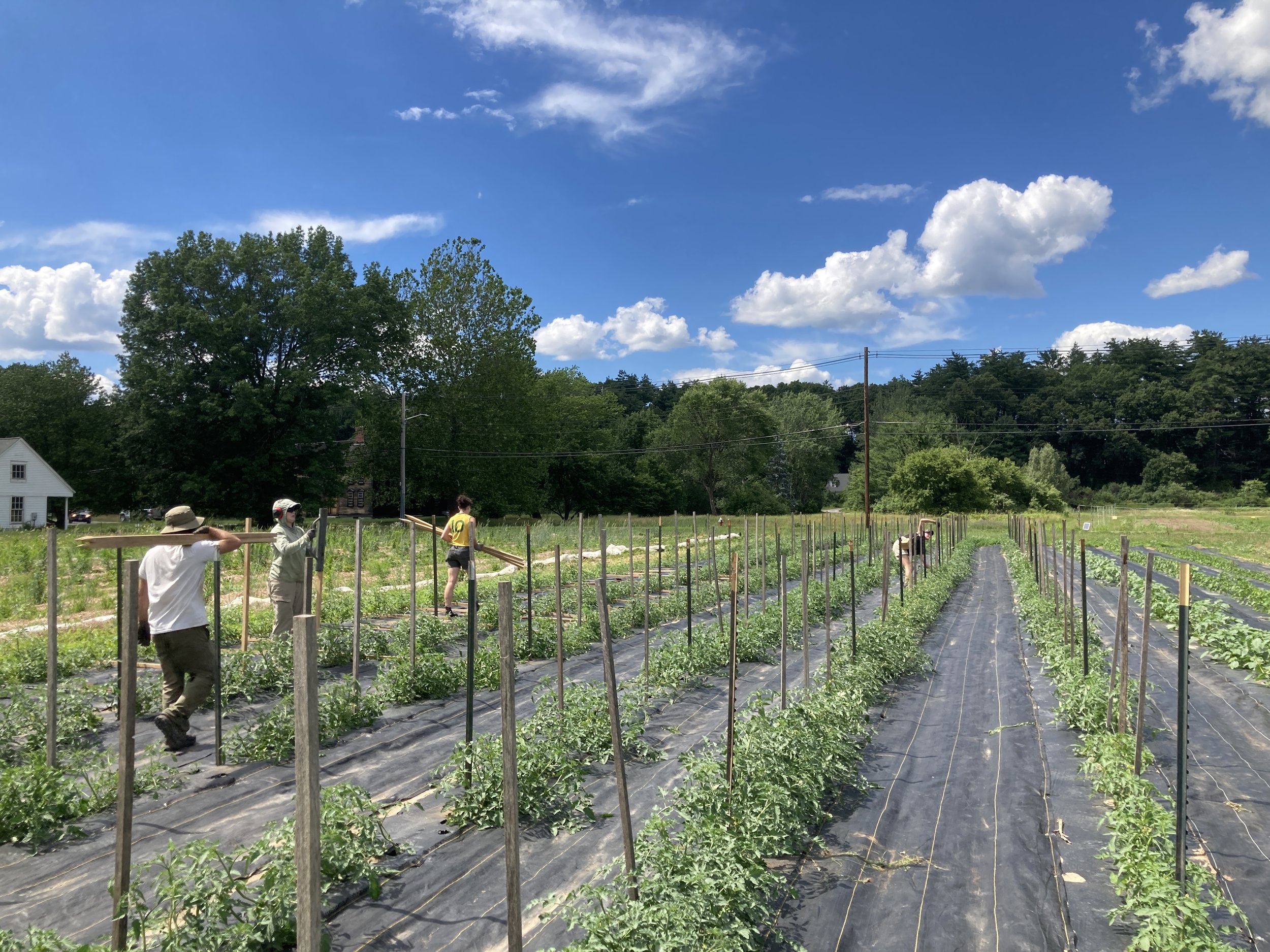
We had perfect rainy weather at the beginning of last week for trellising tomatoes in the high tunnels, followed by perfect sunny weather for trellising tomatoes in the field later in the week!

We will be closed for the holiday on Saturday, July 4th, but the CSA will be open instead on Friday, July 3rd during our regular hours (11am - 6pm).

This week is going to be a tough one for us because of the heat. We usually have one or two days per season when we send crew home early because of the extreme temperatures, but we don’t usually have 3 days in a row of this type of heat! We’ll adjust activities as best we can to keep everyone safe and minimize crop loss. That means no pounding tomato trellising posts and definitely no high tunnel projects from Wednesday onward.

Hot and dry conditions are perfect for killing weeds, so after we finish harvesting in the morning, we’ll work on hand weeding and tractor cultivation. Even though these are some of the less strenuous tasks we can do, we still want to minimize the amount of time we’re in direct sun during the afternoon, so afternoons will consist of washing bins and seeding plant starts in the shade. We do still need to water the greenhouses and run irrigation in the heat of the day, but we’ll keep those tasks as truncated as possible and have extra popsicle breaks!

In the past, we have sometimes closed the farm stand during extreme heat, in part because leafy greens wilt quickly. However, thanks to a display fridge that we got though an Economic Vitality grant from the Town last year, we are now able to keep greens fresh on hot days in the farm stand. We don’t have a big enough fridge to do that in the CSA distribution area, so we won’t have really tender greens like arugula this week (we can’t keep arugula from wilting when it’s 80 degrees, let alone 100!). Slightly crisper greens like salanova and kale should fare a little better, but we may try out pre-bagging greens if we’re having trouble.

This week’s recipes are all either no stove or minimal stove usage required!

In the CSA this week:

  • Summer squash - First of the season!

  • Zucchini - First of the season!

  • Cucumbers - Grown in our high tunnel.

  • Carrots - We’ll have orange or purple this week.

  • Beets

  • Garlic scapes - These are essentially the flower stalks of garlic plants. We snap them off to force more growing energy into the bulbs, but they are also edible and can be used much like regular garlic (it’s just a milder flavor).

  • Scallions - The high tunnel-grown scallions have been cleared out, so these ones will come mostly from the field.

  • Fennel - From the high tunnel and later in the week, the field.

  • Cabbage - This week we will have savoy, arrowhead (also known by the name of the variety we grow, which is called Caraflex), and regular round green cabbage.

  • Mini daikon radish

  • Chard

  • Curly kale

  • Lettuce - red leaf and panisse (oakleaf)

  • Salanova lettuce mix - This cut leaf mix is a little crisper than a mesclun mix and therefore keeps well for longer.

CSA Pick-Your-Own:

  • Herbs: Basil, Thai basil, dill flowers, parsley, sage, mint, thyme

In the farm store:

Farm store hours are Tuesday-Friday 11am-6pm and Saturday 9am-3pm. In addition to most of the items listed in the CSA, we will have:

  • Cherry tomatoes - From the high tunnel. Limited, but production is picking up

  • Thin skinned cucumbers

  • Broccolini- A good supply starting Tuesday!

  • Arugula - It’s really tender, so look for it in the display fridge.

  • Flowers - We will have both snapdragon and mixed variety bouquets all week.

  • Salsa Verde - Made by Kenneth at Eastern Mass Provision from our own organic tomatillos, onions, garlic, jalapeños and cilantro. Mild.

  • Hot Sauce - Made by Kenneth at Eastern Mass Provision from our own organic habañeros, aji rico, fresno, cayenne, Hungarian hot wax and garlic. Hot.

  • Seasonal Medley Mushrooms - From Mycoterra Farm in Deerfield, MA. Certified organic.

  • Shiitake Mushrooms - From Mycoterra Farm in Deerfield, MA. Certified organic.

  • Dried Mushrooms - 1 oz dried shiitake mushrooms from Mycoterra Farm in Deerfield, MA. Certified organic.

  • Baer’s Best Beans - Black Turtle, Italian Cranberry, and Cannellini are Certified Organic. Bumblebee and Black Coco are not organic. Grown by Charley Baer in South Berwick, ME.

  • Maple syrup - 12 oz. bottles from our friend Jim at Hollis Hills Farm in Fitchburg, MA. Not Organic.

  • Raspberry Vinegar Infusion -Silferleaf Farm in Concord, MA. Certified Organic.

  • Herb seedlings - basil, parsley, and oregano

Zucchini Carpaccio

Recipe from Letizia Mattiacci, adapted by Julia Moskin for NY Times Cooking

Ingredients

  • 2 medium zucchini

  • Salt

  • 2 garlic cloves, thinly sliced

  • Freshly squeezed juice of ½ lemon

  • 2 to 3 tablespoons fruity olive oil

  • 2 tablespoons toasted pine nuts or chopped almonds, and/or chopped fresh herbs

  • 1 teaspoon raw honey, 1 tablespoon raisins or fresh Parmesan shavings (optional)

Preparation

  1. Slice zucchini lengthwise with a mandoline or chef’s knife as thinly as you can, and sprinkle lightly with salt. Place in a colander for 30 minutes to remove the excess moisture, tossing occasionally.

  2. Dry on paper towels and arrange the zucchini in layers in a shallow serving dish, adding slices of garlic between the layers. Drizzle with lemon juice and marinate, refrigerated, for at least 15 minutes and up to 1 hour. If you have more than 2 layers, you may need to turn the zucchini upside down every 15 minutes to coat them evenly with the lemon juice.

  3. To serve, arrange a few slices of zucchini on each plate. (Remove and discard garlic slices as you go.) Drizzle with olive oil and top with nuts and/or herbs. If you wish, add a few drops of runny honey, a few raisins or some Parmesan shavings.

White Bean and Garlic Scapes Dip

by Melissa Clark, NY Times Cooking

We’ve shared this recipe many times! It is a perfect dip for the carrots and cukes we’re enjoying this week, and does not require turning on the stove! We found that where it says “more to taste”, we definitely prefer it with more! (We also add more garlic scapes than suggested).

Ingredients

  • ⅓ cup sliced garlic scapes (3 to 4)

  • 1 tablespoon freshly squeezed lemon juice, more to taste

  • ½ teaspoon coarse sea salt, more to taste

  • Ground black pepper to taste

  • 1 can (15 ounces) cannellini beans, rinsed and drained

  • ¼ cup extra virgin olive oil, more for drizzling

Preparation

  1. In a food processor, process garlic scapes with lemon juice, salt and pepper until finely chopped. Add cannellini beans and process to a rough purée.

  2. With motor running, slowly drizzle olive oil through feed tube and process until fairly smooth. Pulse in 2 or 3 tablespoons water, or more, until mixture is the consistency of a dip. Add more salt, pepper and/or lemon juice, if desired.

  3. Spread out dip on a plate, drizzle with olive oil, and sprinkle with more salt.

Fresh Spring Rolls with Peanut Sauce

adapted from Cookie + Kate

Ingredients

Spring Rolls

  • 2 ounces rice vermicelli or maifun brown rice noodles

  • 1 teaspoon toasted sesame oil

  • ¼ teaspoon fine sea salt

  • 1 cup torn butter lettuce, ribs removed

  • 1 cup very thinly sliced cabbage

  • 2 medium carrots, peeled and cut into matchsticks or sliced into strips with a julienne peeler

  • 2 Persian (mini) cucumbers or 1 small cucumber, thinly sliced or sliced into strips with a julienne peeler

  • ¼ cup thinly sliced green onions

  • ¼ cup roughly chopped Thai basil

  • ¼ cup roughly chopped fresh mint

  • 8 sheets rice paper (spring roll wrappers)

Peanut Sauce

  • ⅓ cup creamy peanut butter

  • 2 tablespoons rice vinegar

  • 2 tablespoons reduced-sodium tamari or soy sauce

  • 2 tablespoons honey or maple syrup

  • 1 tablespoons toasted sesame oil

  • 2 cloves garlic, pressed or minced

  • 2 to 3 tablespoons water, as needed

Instructions

  1. To make the spring rolls: Bring a pot of water to boil and cook the noodles just until al dente, according to package directions. Drain, rinse them under cool water, and return them to the pot. Off the heat, toss the noodles with the sesame oil and salt, and set aside. Fill a shallow pan (a pie pan or 9″ round cake pan works great) with an inch of water. Fold a lint-free tea towel in half and place it next to the dish. Make sure your prepared fillings are within reach. Combine the green onion, cilantro and mint in a small bowl, and stir.

  2. Place one rice paper in the water and let it rest for about 20 seconds, give or take. You’ll learn to go by feel here—wait until the sheet is pliable but not super floppy. Carefully lay it flat on the towel.

  3. Leaving about 1 inch of open rice paper around the edges, cover the lower third of the paper with a few pieces of butter lettuce, followed by a small handful of rice noodles, some cabbage, and a few strips of carrot, cucumber. Sprinkle generously with the herb mix.

  4. Fold the lower edge up over the fillings, rolling upward just until the filling is compactly enclosed. Fold over the short sides like you would to make a burrito. Lastly, roll it up. Repeat with the remaining ingredients.

  5. To make the peanut sauce: In a small bowl, whisk together the peanut butter, rice vinegar, tamari, honey, sesame oil, and garlic. Whisk in 2 to 3 tablespoons water, as needed to make a super creamy but dip-able sauce.

  6. Serve the spring rolls with peanut sauce on the side. You can serve them whole, or sliced in half on the diagonal with a sharp chef’s knife.

CSA Week 3 and Farm stand updates

June 23, 2026 Lise Holdorf

We had some beautiful weather last week for working outside, but we’ve got a few days this week that will provide us with a great opportunity to catch up on work in our high tunnels. Tomato pruning and trellising can be especially challenging to keep up with in the high tunnel. These plants grow fast in a protected environment, and as the plants get more robust, each row can take hours to complete (there are 10 rows in the high tunnel). While tomato trellising is usually a coveted job, when it’s sunny out it fast loses it’s appeal due to the higher heat in the high tunnels! Unless its cool and rainy out, we do all of our trellising in the mornings, but mornings are also prime time for another important farm activity: harvest. This means that it can take a few weeks to finish a round of pruning and trellising, at which point it’s time to start another round!

This is all a lot of work, but it is worth it to enjoy an extra month of such a popular and important crop. This year, we decided to cut back a little on high tunnel peppers so that we could also have space for growing cherry tomatoes in the high tunnel. We think it’s a paying off, as we taste tested the first ripe cherry tomatoes of the season on Monday, and if all goes well, we’ll have limited amounts in the farm stand for the weekend!

A scheduling note: Both the CSA and farm store will be closed Saturday, July 4th. CSA pick-up will be moved to Friday, July 3rd from 11am-6pm.

In the CSA this week:

  • Carrots - First of the season!

  • Garlic scapes - These are essentially the flower stalks of garlic plants. We snap them off to force more growing energy into the bulbs, but they are also edible and can be used much like regular garlic (it’s just a milder flavor).

  • Cabbage - This week we will have two varieties: arrowhead (also known by the name of the variety we grow, which is called Caraflex), and regular round green cabbage.

  • Chard - We are growing chard both in the high tunnel and field this season!

  • Cucumbers - Grown in our high tunnel.

  • Fennel - Grown in our high tunnel (next to the cucumbers!).

  • Beets

  • Scallions - Grown in our high tunnel.

  • Radishes

  • Salad turnips

  • Mini daikon radish

  • Curly kale

  • Bok choi

  • Lettuce - red leaf, panisse (oakleaf), and romaine varieties!

  • Salanova lettuce mix - This cut leaf mix is a little crisper than a mesclun mix and therefore keeps well for longer.

  • Arugula

CSA Pick-Your-Own:

  • Herbs: Basil, dill flowers, parsley, sage, mint, thyme

  • Sugar snap peas or snow peas - These are winding down, so for this week the peas will be for the Regular size CSA only.

In the farm store:

Farm store hours are Tuesday-Friday 11am-6pm and Saturday 9am-3pm. In addition to most of the items listed in the CSA, we will have:

  • Cherry tomatoes - At the end of the week! Limited. These are grown in our high tunnel, which is why they are ready earlier than usual.

  • Thin skinned cucumbers

  • Broccolini

  • Flowers - We will have both snapdragon and mixed variety bouquets all week.

  • Salsa Verde - Made by Kenneth at Eastern Mass Provision from our own organic tomatillos, onions, garlic, jalapeños and cilantro. Mild.

  • Hot Sauce - Made by Kenneth at Eastern Mass Provision from our own organic habañeros, aji rico, fresno, cayenne, Hungarian hot wax and garlic. Hot.

  • Seasonal Medley Mushrooms - From Mycoterra Farm in Deerfield, MA. Certified organic.

  • Shiitake Mushrooms - From Mycoterra Farm in Deerfield, MA. Certified organic.

  • Dried Mushrooms - 1 oz dried shiitake mushrooms from Mycoterra Farm in Deerfield, MA. Certified organic.

  • Baer’s Best Beans - Black Turtle, Italian Cranberry, and Cannellini are Certified Organic. Bumblebee and Black Coco are not organic. Grown by Charley Baer in South Berwick, ME.

  • Maple syrup - 12 oz. bottles from our friend Jim at Hollis Hills Farm in Fitchburg, MA. Not Organic.

  • Raspberry Vinegar Infusion -Silferleaf Farm in Concord, MA. Certified Organic.

  • Herb seedlings - basil, parsley, and oregano

Roasted Cabbage With Parmesan, Walnuts and Anchovies

by Melissa Clark, from NY Times Cooking

Ingredients

  • 1 medium head green cabbage (about 2 ½ pounds)

  • ½ cup extra-virgin olive oil, plus more as needed

  • Salt, as needed

  • ¾ cup finely grated Parmesan, plus more for serving

  • 6 anchovy fillets, minced

  • 2 fat garlic cloves, finely grated, passed through a garlic press or minced

  • 1 teaspoon fresh thyme leaves

  • ½ teaspoon freshly ground black pepper, plus more as needed

  • ⅔ cup chopped walnuts or other nuts, such as almonds or hazelnuts

  • ½ cup chopped fresh dill or cilantro

Preparation

  1. Heat oven to 450 degrees. Cut the cabbage in quarters lengthwise through the core, then cut out the cores and stem. Slice the quarters lengthwise into 1 ½-inch-thick wedges.

  2. Place wedges on a rimmed sheet pan, flat sides down. It’s OK if the pan seems a bit crowded; the wedges will shrink as they roast, but try not to overlap them if possible. Lightly drizzle them with oil and season with salt.

  3. In a small bowl, combine Parmesan, anchovies, garlic, thyme and black pepper. Stir in ½ cup oil to make a loose paste. Massage paste into each cabbage wedge, stuffing the mixture in between the leaves.

  4. Lightly drizzle cabbage with a little more oil. Roast until cabbage is lightly browned in spots, 25 to 30 minutes.

  5. Remove pan from oven and sprinkle walnuts all over the top of the cabbage. Roast for another 5 minutes or so, until cabbage is tender and caramelized and the walnuts are golden and toasted.

  6. Sprinkle cabbage with dill and more Parmesan and black pepper, if you’d like. Serve immediately.

CSA Week 2 and Farm stand updates

June 16, 2026 Lise Holdorf

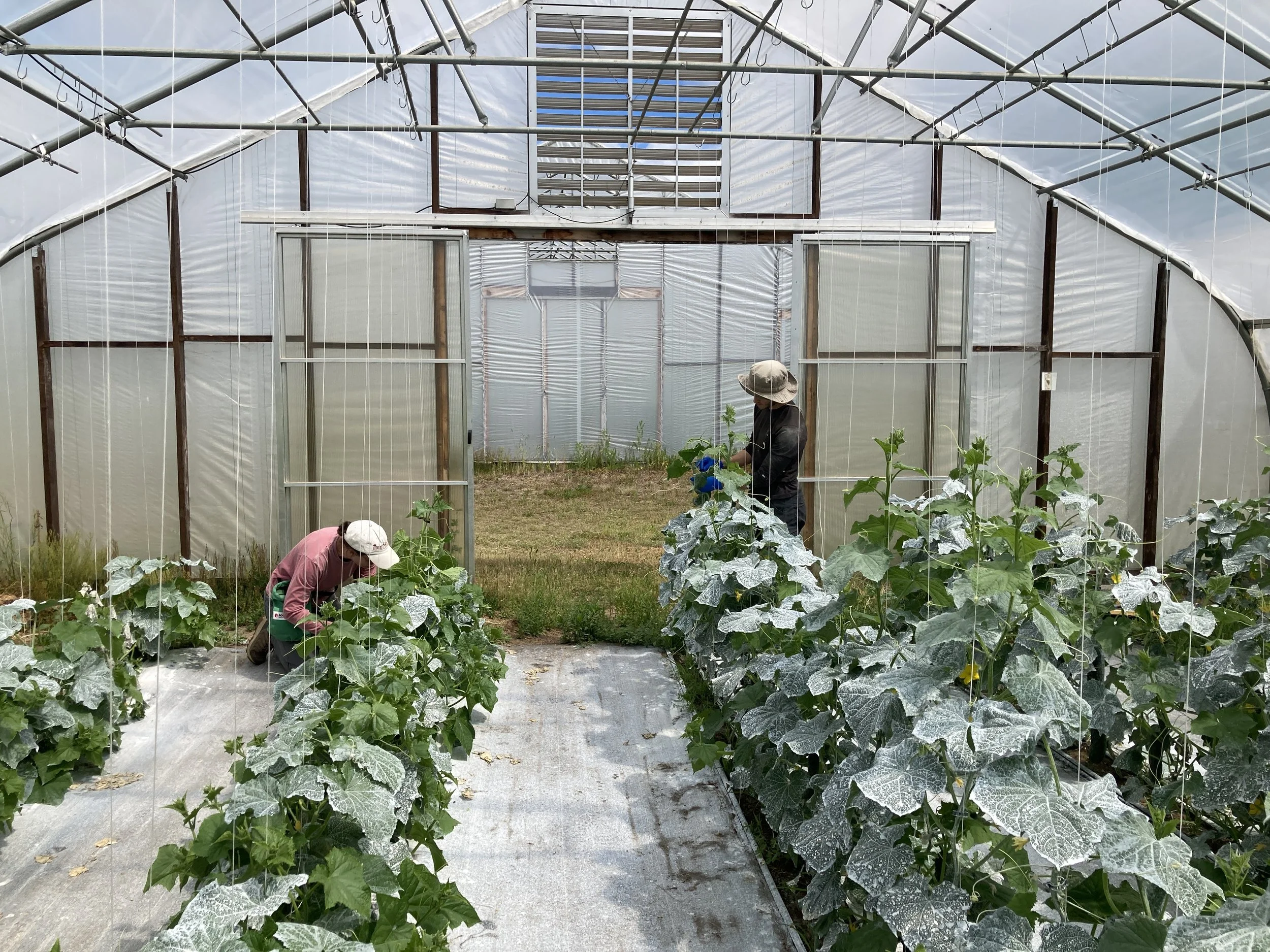
Rebecca and Jake trellis cucumbers in the high tunnel. The plants are coated in a layer of clay, which is supposed to offer protection from pests. The clay really gives a sense of how quickly these plants grow this time of year. The bright green new growth is just since last Thursday!

With the start of the CSA, the rhythm of our days shifts a bit. While harvesting has been a component of every day since the start of asparagus season, we generally would only harvest for about an hour before we moved on to other tasks that prepare us for future harvests, like field prep, planting, weeding, fencing, irrigating, and trellising. This year we’ve also been doing more tractor fixing than usual! Now we have much larger quantities to harvest as we welcome about 200 families to the farm every week in addition to many of our farm stand customers. None of the prior tasks go away, but harvesting is the focus of most of our days! Fortunately, with a larger crew this year we are keeping up with many of those tasks well. Even so, after the heat of last week, we have been watching weeds take off and are eager to spend some time on weeding and tractor cultivation, as well as doing some preventative tasks like putting down landscape fabric and straw mulch!

A scheduling note: Both the CSA and farm store will be closed Saturday, July 4th. CSA pick-up will be moved to Friday, July 3rd from 11am-6pm.

In the CSA this week:

  • Cucumbers - The first of the season, coming from our high tunnel. Limited quantities this week, but we expect production to ramp up soon!

  • Fennel - Grown in our high tunnel (next to the cucumbers!).

  • Beets

  • Scallions - Grown in our high tunnel.

  • Kohlrabi - The flavor and texture of kohlrabi is similar to cabbage or broccoli stems, but it is milder and sweeter. It can be roasted, shredded raw as part of salad or coleslaw, chopped up and added to soup, or breaded and fried, among many other options!

  • Radishes - We’ll have both a red variety and a purple variety.

  • Salad turnips

  • Mini daikon radish

  • Culy kale

  • Bok choi

  • Lettuce

  • Salanova lettuce mix - This cut leaf mix is a little crisper than a mesclun mix and therefore keeps well for longer.

  • Arugula

  • Mustard greens

Coming soon: carrots and garlic scapes!

CSA Pick-Your-Own:

  • Herbs: Basil, cilantro, dill, parsley, sage

  • Sugar snap peas

  • Snow peas

In the farm store:

Farm store hours are Tuesday-Friday 11am-6pm and Saturday 9am-3pm. In addition to most of the items listed in the CSA, we will have:

  • Thin skinned cucumbers - a favorite!

  • Broccolini

  • Flowers - We will have both snapdragon and mixed variety bouquets all week. Our mixed bouquets will have even more new varieties this week from our hardy annual bed!

  • Salsa Verde - Made by Kenneth at Eastern Mass Provision from our own organic tomatillos, onions, garlic, jalapeños and cilantro. Mild.

  • Hot Sauce - Made by Kenneth at Eastern Mass Provision from our own organic habañeros, aji rico, fresno, cayenne, Hungarian hot wax and garlic. Hot.

  • Seasonal Medley Mushrooms - Starting Thursday this week. From Mycoterra Farm in Deerfield, MA. Certified organic.

  • Shiitake Mushrooms - Starting Thursday this week. From Mycoterra Farm in Deerfield, MA. Certified organic.

  • Dried Mushrooms - 1 oz dried shiitake mushrooms from Mycoterra Farm in Deerfield, MA. Certified organic.

  • Baer’s Best Beans - Black Turtle, Italian Cranberry, and Cannellini are Certified Organic. Bumblebee and Black Coco are not organic. Grown by Charley Baer in South Berwick, ME.

  • Maple syrup - 12 oz. bottles from our friend Jim at Hollis Hills Farm in Fitchburg, MA. Not Organic.

  • Raspberry Vinegar Infusion -Silferleaf Farm in Concord, MA. Certified Organic.

  • Raspberry Jam - We just got a new batch delivered! From Silferleaf Farm in Concord, MA. Certified Organic.

  • Seedlings: Our seedling sale is mostly winding down, but we have cucumbers, husk cherries, and herbs including parsley, basil, thyme (limited) and oregano.

Asian Peanut Rice Noodle Stir-Fry

from Marley Spoon (adapted)

Ingredients

  • 5 oz stir-fry rice noodles

  • 2 limes

  • ½ oz fresh cilantro

  • 1 large clove garlic

  • ½ lb bok choy (or baby bok choy)

  • 2 oz snow peas

  • 1 carrot

  • 1 oz salted peanuts

  • 2 oz (4 tbsp) tamari soy sauce

  • 1½ oz (about 3 tbsp) peanut butter

Preparation

  1. Cook noodles: Bring a large pot of salted water to a boil. Add the to boiling water, cook, stirring occasionally to prevent sticking, until just tender, 6–8 minutes. Drain noodles and rinse under warm water. Reserve pot for step 4.

  2. Prep ingredients: Squeeze 1½ tablespoons lime juice into a medium bowl; cut any remaining lime into wedges. Finely chop cilantro stems, keeping leaves whole. Finely grate ¼ teaspoon garlic. Halve bok choy lengthwise, rinse to remove any grit, and cut crosswise into 1-inch thick slices. Trim snow peas. Scrub and trim carrot, then thinly slice on an angle. Coarsely chop peanuts.

  3. Prep sauce: To the bowl with lime juice, add tamari, peanut butter, cilantro stems, grated garlic, ⅓ cup water, and 1 tablespoon sugar; whisk to combine.

  4. Sauté vegetables: Heat 1 tablespoon oil in reserved pot over medium-high. Add carrots and 2 tablespoons water. Cover and cook until carrots are tender and browned in spots, 1–2 minutes. Uncover, add bok choy and snow peas. Cook, stirring occasionally, until bok choy and snow peas are barely tender, about 2 minutes.

  5. Finish noodles: Remove pot from heat; add sauce and cooked noodles, tossing until coated with sauce. Add whole cilantro leaves, and toss to combine.

  6. Serve noodles topped with chopped peanuts, and with any lime wedges on the side, for squeezing over. Enjoy!

Blood Orange, Fennel and Avocado Salad with Lemon Citronette

from Cookie + Kate

Ingredients

Salad

  • 4 large handfuls of spring greens

  • 2 blood oranges, sliced into segments

  • 1 bulb fennel, quartered, cored and sliced into super thin strips (reserve fennel fronds)

  • 1 avocado, diced

  • 2 ounces (about ⅓ cup) goat cheese, crumbled

  • 3 tablespoons sliced almonds

Citronette

  • ¼ cup olive oil, more to taste

  • 1 lemon, preferably organic, zested and juiced

  • ½ teaspoon Dijon mustard

  • ½ teaspoon honey

  • Sea salt and lots of freshly ground black pepper, to taste

Instructions

  1. Lightly toast the almonds: In a small skillet over medium heat, toast the almonds for a few minutes, stirring frequently so they don’t burn. Once the almonds are fragrant and starting to turn golden, remove from heat and transfer to a plate.

  2. In a large serving bowl, combine the greens, segmented blood oranges, sliced fennel, diced avocado, goat cheese and warm almonds. If the fennel’s feathery fronds (say that five times fast) are in good shape, chop up a handful’s worth and toss them into the salad.

  3. In a small bowl, whisk together the dressing ingredients until well blended. Whisk in more olive oil if the dressing tastes too tart. The final result should be pleasantly tangy.

  4. Once you’re ready to serve, drizzle citronette over the salad (you might not need all of it) and toss. Serve immediately.

Greek-Style Kohlrabi Pie or Gratin With Dill and Feta

by Martha Rose Shulman from NY Times Cooking

If you don’t want to bother with the phyllo dough or you want to cut down on carbs or calories, make this as a gratin (see below). It’s delicious either way. Because of the moisture in the kohlrabi, your phyllo will need to be recrisped in a low oven if the pie sits for any length of time.

Ingredients

  • 2 pounds kohlrabi, with greens if possible

  • 3 tablespoons extra virgin olive oil

  • 1 medium or large onion, finely chopped

  • 2 large garlic cloves, minced

  • Salt and freshly ground pepper to taste

  • ⅓ cup chopped fresh dill

  • ¼ cup chopped fresh Italian parsley

  • 3 large eggs, beaten

  • 5 ounces feta cheese, crumbled

  • 12 sheets phyllo dough (½ pound)

  • 1 tablespoon unsalted butter, melted (optional)

Preparation

  1. If the kohlrabi still has greens attached, stem and wash the greens and blanch in a pot of salted boiling water for 1 minute, or steam. Refresh with cold water, squeeze out excess water and chop coarsely. Set aside. Peel the kohlrabi, making sure to remove the fibrous layer right under the skin, and grate using a food processor fitted with the grater attachment.

  2. Heat 1 tablespoon of the olive oil in a large, heavy skillet over medium heat and add the onion. Cook, stirring often, until it is tender, about 5 minutes. Add a generous pinch of salt, stir together, and stir in the garlic. Cook, stirring, until fragrant, about 30 seconds, and stir in the kohlrabi. Add another tablespoon of olive oil if necessary. Cook, stirring often, until the mixture is very tender and beginning to color, about 10 minutes. If there is a lot of liquid in the pan from the kohlrabi, turn up the heat and cook, stirring, until it boils off. Add salt and pepper to taste. Stir in the kohlrabi greens, dill and parsley, and set aside.

  3. Preheat the oven to 375 degrees. Brush a 10-inch tart pan or cake pan with olive oil. Beat the eggs in a large bowl, and beat in the crumbled feta. Stir in the kohlrabi mixture and combine well.

  4. Line the pan with 7 pieces of phyllo, brushing each piece with olive oil, or a combination of olive oil and melted butter, and turning the dish after each addition so that the edges of the phyllo drape evenly over the pan. Fill with the kohlrabi mixture. Fold the draped edges in over the filling, then layer the remaining 5 pieces on top, brushing each piece with olive oil. Tuck the edges into the sides of the pan. Make a few slashes in the top crust so that steam can escape as the pie bakes. Note: If making a gratin, use a 2-quart baking dish, brush with olive oil and fill with the kohlrabi mixture.

  5. Bake the pie for 50 minutes (40 for the gratin), until the crust is crisp and dark golden brown. Serve hot, warm or at room temperature.

Tips

  • Advance preparation: The kohlrabi filling can be made through Step 2 up to a day ahead and refrigerated. You can assemble the pie several hours before baking and keep in the refrigerator, or freeze. Transfer directly from the freezer to the preheated oven, and increase the baking time by about 10 minutes. You can bake the pie ahead, but you must recrisp the phyllo in a medium-low oven (325 degrees) for 10 to 20 minutes.

  • Variation: For a gratin, omit the phyllo and all but 1 optional tablespoon of the additional oil for brushing it (so you will only need 1 to 2 tablespoons olive oil). Oil a 2-quart baking dish and place the filling in the dish. Drizzle 1 tablespoon of olive oil over the top if desired and bake 40 minutes in a 375-degree oven, until the top is nicely browned.

← Newer Posts Older Posts →

Newsletter Sign-up

Our newsletter includes our blog posts (weekly during the season, monthly in the off-season), as well as occasional farm announcements not posted on the blog.

We respect your privacy.

Thank you!

Click on a month below to view older posts:

  • August 2026 (3)
  • July 2026 (4)
  • June 2026 (5)
  • May 2026 (7)
  • April 2026 (5)
  • March 2026 (5)
  • January 2026 (4)
  • December 2025 (2)
  • November 2025 (4)
  • October 2025 (6)
  • September 2025 (6)
  • August 2025 (4)
  • July 2025 (5)
  • June 2025 (6)
  • May 2025 (8)
  • April 2025 (8)
  • March 2025 (2)
  • February 2025 (2)
  • January 2025 (2)
  • December 2024 (3)
  • November 2024 (5)
  • October 2024 (4)
  • September 2024 (6)
  • August 2024 (5)
  • July 2024 (5)
  • June 2024 (4)
  • May 2024 (6)
  • April 2024 (6)
  • March 2024 (3)
  • February 2024 (1)
  • January 2024 (1)
  • December 2023 (1)
  • November 2023 (3)
  • October 2023 (5)
  • September 2023 (6)
  • August 2023 (5)
  • July 2023 (5)
  • June 2023 (4)
  • May 2023 (9)
  • April 2023 (7)
  • February 2023 (2)
  • January 2023 (1)
  • December 2022 (2)
  • November 2022 (3)
  • October 2022 (4)
  • September 2022 (4)
  • August 2022 (5)
  • July 2022 (4)
  • June 2022 (4)
  • May 2022 (9)
  • April 2022 (6)
  • March 2022 (2)
  • February 2022 (1)
  • January 2022 (2)
  • December 2021 (1)
  • November 2021 (3)
  • October 2021 (4)
  • September 2021 (4)
  • August 2021 (5)
  • July 2021 (4)
  • June 2021 (4)
  • May 2021 (8)
  • April 2021 (6)
  • March 2021 (1)
  • January 2021 (2)
  • December 2020 (1)
  • November 2020 (4)
  • October 2020 (4)
  • September 2020 (4)
  • August 2020 (5)
  • July 2020 (5)
  • June 2020 (5)
  • May 2020 (6)
  • March 2020 (1)
  • February 2020 (1)
  • January 2020 (1)
  • November 2019 (3)
  • October 2019 (4)
  • September 2019 (6)
  • August 2019 (4)
  • July 2019 (5)
  • June 2019 (4)
  • May 2019 (2)
  • March 2019 (1)
  • February 2019 (2)
  • January 2019 (1)
  • December 2018 (1)
  • November 2018 (2)
  • October 2018 (5)
  • September 2018 (4)
  • August 2018 (4)
  • July 2018 (5)
  • June 2018 (4)
  • May 2018 (4)
  • March 2018 (1)
  • February 2018 (1)
  • January 2018 (1)
  • December 2017 (1)
  • November 2017 (1)
  • October 2017 (5)
  • September 2017 (4)
  • August 2017 (4)
  • July 2017 (5)
  • June 2017 (4)
  • May 2017 (5)
  • April 2017 (3)
  • March 2017 (2)
  • February 2017 (1)
  • January 2017 (1)
  • December 2016 (1)
  • November 2016 (1)
  • October 2016 (5)
  • September 2016 (4)
  • August 2016 (5)
  • July 2016 (4)
  • June 2016 (4)
  • May 2016 (5)
  • April 2016 (1)
  • March 2016 (1)
  • February 2016 (1)
  • January 2016 (1)
  • December 2015 (1)
  • November 2015 (1)
  • October 2015 (4)
  • September 2015 (5)
  • August 2015 (5)
  • July 2015 (5)
  • June 2015 (5)
  • May 2015 (7)
  • April 2015 (2)
  • March 2015 (2)
  • February 2015 (1)
  • January 2015 (1)
  • December 2014 (1)
  • November 2014 (1)
  • October 2014 (4)
  • September 2014 (6)
  • August 2014 (6)
  • July 2014 (8)
  • June 2014 (5)
  • May 2014 (3)
  • April 2014 (5)
  • March 2014 (2)

Barrett's Mill Farm  |  449 Barrett's Mill Road  |  Concord, MA 01742


2026 Farm Store Schedule

Open May - October 31st

Tuesday - Friday 11am - 6pm
Saturday 9am - 3pm

2026 CSA Schedule

June 10th - November 21st

Wednesday 11am - 6:30pm
Saturday 9am - 3pm


Newsletter Sign-up

Sign up to receive our newsletter (weekly in-season, monthly in the off-season).

We respect your privacy.

Thank you!