
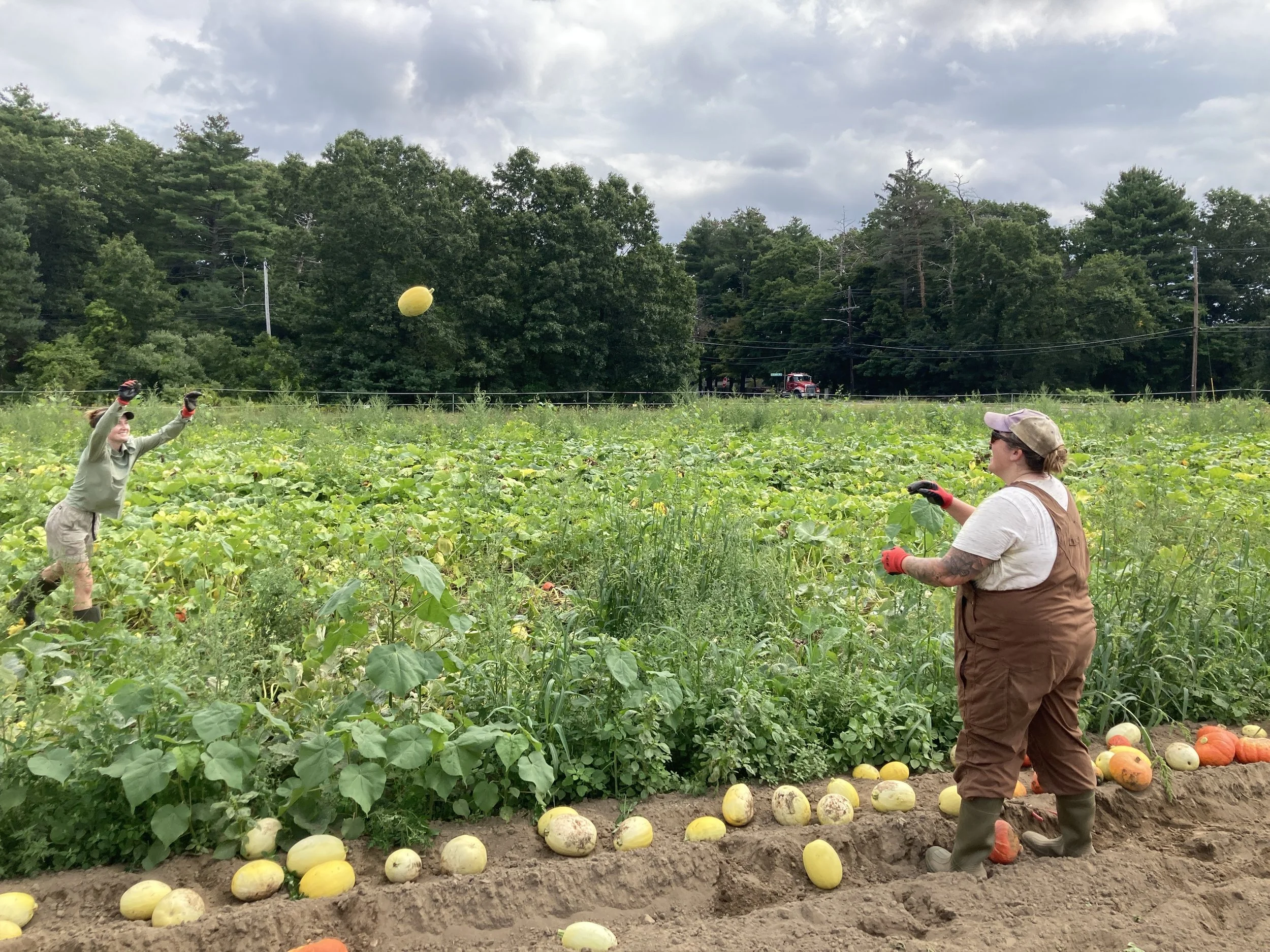
Winter squash harvest is one of the most highly anticipated harvests of the season, especially for the many former volleyball and softball players who have worked here - there is a lot of throwing and catching involved! We start by clipping the squash off the plants, and then tossing or rolling the squash into windrows (which are rows in the field where the squash is consolidated before they are collected). There’s more throwing in the next step too. We set a bulk crate onto a tractor and drive it through the field while some folks toss squash from the windrow to others next to the bulk crate. Those people next to the bulk crate then set it gently into the bin, which is then brought to our barn for storage or curing.
Last week we tackled spaghetti squash and kabocha, and if we have some dry days this week, our next top priorities will be delicata, pie pumpkin and butternut. There are varying amounts of time that squash requires to cure before they’re ready to eat. Some types of squash, like spaghetti squash, are immediately ready to eat. Others, like butternut and tetsukabuto, take 6-8 weeks of curing before they’re. This week we’ll be enjoying last week’s spaghetti squash harvest!
Our other major activity last week was planting next year’s strawberries. This year was a complete crop failure, in large part because of severe deer predation, but also because of a couple of very cold nights in May that damaged the strawberry blossoms. We have addressed the deer issue by planting all of the strawberries inside the 8’ lettuce fence we set up this past spring. While we can still have crop losses due to cold overnight temperatures in May, they hopefully won’t be a fatal blow to more robust plants!
In the CSA this week:
Spaghetti squash - This unique type of squash has stringy flesh that looks like angel hair pasta. Step one in this week’s recipe has a good description of how to cook a spaghetti squash, and from there you can either continue with the recipe, or you can simply serve it with olive oil or butter and some herbs.
Garlic - We’re now starting to take down the garlic that has been hanging in the farm stand to cure. We’ll set aside about 25% of all the heads for seed, which we’ll plant in October for next year’s garlic. This cured garlic will have a more intense flavor than the uncured garlic we had earlier. It should be stored in a cool, dark and dry space - not in the refrigerator.
Scallions
Heirloom and Hyloom tomatoes
Slicing tomatoes
Colored peppers - Sweet bells and Bull’s Horn varieties.
Green and purple peppers
Beets
Curly Kale - It’s quite tender as it’s from our new planting!
Arugula
Baby bok choi
Lettuce
CSA Pick-Your-Own:
Cherry tomatoes - All 15 varieties are producing! Sungold, Black Cherry, Honey Bee, White Cherry, Yellow Mini, Cherry Bomb, Jasper, Citrine, Midnight Pear, Moonbeam, Valentine, Apple Yellow, Clementine, Mountain Magic and Nova.
Green beans
Tomatillos
Shishito peppers
Hot peppers - Varieties include Aji Rico, Pantera (jalapeño), Hungarian Hot Wax, Red Ember (cayenne), and Hot Paper Lantern (habañero - extremely hot!).
Herbs: Basil, Thai basil, parsley, sage, mint, thyme, chives
In the farm store:
Farm store hours are Tuesday-Friday 11am-6pm and Saturday 9am-3pm.
In addition to most of the items listed in the CSA above, we will have:
Cucumbers - Picklers, slicers, and thin-skinned.
Zucchini
Summer squash
Potatoes - Constance Gold and Dark Red Norland varieties. From MX Morningstar Farm in Hudson, NY. Certified Organic.
Cherry tomatoes - Sakura variety from our high tunnel as other varieties from the field.
Flowers - Mixed bouquets and dahlia bunches with eucalyptus!
Peaches - From Ed at Long Run Produce in Boxborough, MA. Certified Organic.
Pears - Sunrise variety. From Ed at Long Run Produce in Boxborough, MA. Certified Organic.
We’re hoping to get another batch of Ed’s organic grapes this week (they sold out in one day on Saturday!)
Sweet corn - From Verrill Farm in Concord. Not organic.
Hot Sauce - Made by Kenneth at Eastern Mass Provision from our own organic habañeros, aji rico, fresno, cayenne, Hungarian hot wax and garlic. Hot.
Baer’s Best Beans - Black Turtle, Italian Cranberry, and Cannellini are Certified Organic. Bumblebee and Black Coco are not organic. Grown by Charley Baer in South Berwick, ME.
Raspberry Vinegar Infusion -Silferleaf Farm in Concord, MA. Certified Organic.
Note on mushrooms: We are taking a few weeks off from mushrooms but will stock them again in the fall!
PYO Flower Field
The flower field is open to both PYO Flower CSA members and the general public for picking by the jar. Please check in at the farm stand before picking. Flowers available for picking include: scabiosa, celosia, ammi, gomphrena, ageratum, strawflower, cosmos, zinnias, rudbeckia, sunflowers, verbena, fireworks gomphrena, starflower (great for drying!), decorative basil, and shiso. Please do not pick from plantings that don’t have a variety sign in front of them.
Spaghetti Squash Gratin With Basil
by Martha Rose Shulman, from NY Times Cooking
Ingredients
1 spaghetti squash, about 3 pounds
1 tablespoon extra virgin olive oil
1 medium onion, finely chopped
2 garlic cloves, minced
Salt
freshly ground pepper
3 large eggs
½ cup low-fat milk
2 tablespoons chopped fresh basil (¼ cup basil leaves)
2 ounces Gruyère cheese, grated (½ cup)
2 tablespoons freshly grated Parmesan or pecorino romano
Preparation
Preheat the oven to 375 degrees. Pierce the squash in several places with a sharp knife. Cover a baking sheet with foil, and place the squash on top. Bake for one hour, turning the squash every 20 minutes until it is soft and easy to cut into with a knife. Remove from the heat, and allow the squash to cool until you can handle it. Cut in half lengthwise, and allow to cool further. Remove the seeds and discard. Scoop out the flesh, and place in a bowl. Run a fork through the flesh to separate the spaghetti-like strands, then chop coarsely. Measure out 4 cups squash. (Use whatever remains for another dish, or freeze.)
Oil a 2-quart gratin or baking dish. Heat the oil over medium heat in a large, heavy skillet, and add the onion. Cook, stirring, until tender, about five minutes. Add the garlic and a generous pinch of salt. Cook, stirring, for another 30 seconds to a minute until fragrant. Add the squash. Cook, stirring often, for five minutes until the strands of squash are a little more tender. Season to taste with salt and pepper, and remove from the heat.
Beat the eggs in a large bowl. Add the milk, salt (about ½ teaspoon), pepper and basil. Stir in the squash mixture and the Gruyère, and combine well. Scrape into the baking dish. Sprinkle the Parmesan or pecorino over the top, and gently press down to moisten.
Bake 40 to 45 minutes until nicely browned and sizzling. Remove from the heat, and allow to cool for 10 to 15 minutes before serving. Serve hot, warm or room temperature.
Tip: Advance preparation:The baked spaghetti squash will keep for four days in the refrigerator. The gratin can be made up to a day ahead and reheated. The recipe can be made through step 2 several hours before completing the gratin and baking.
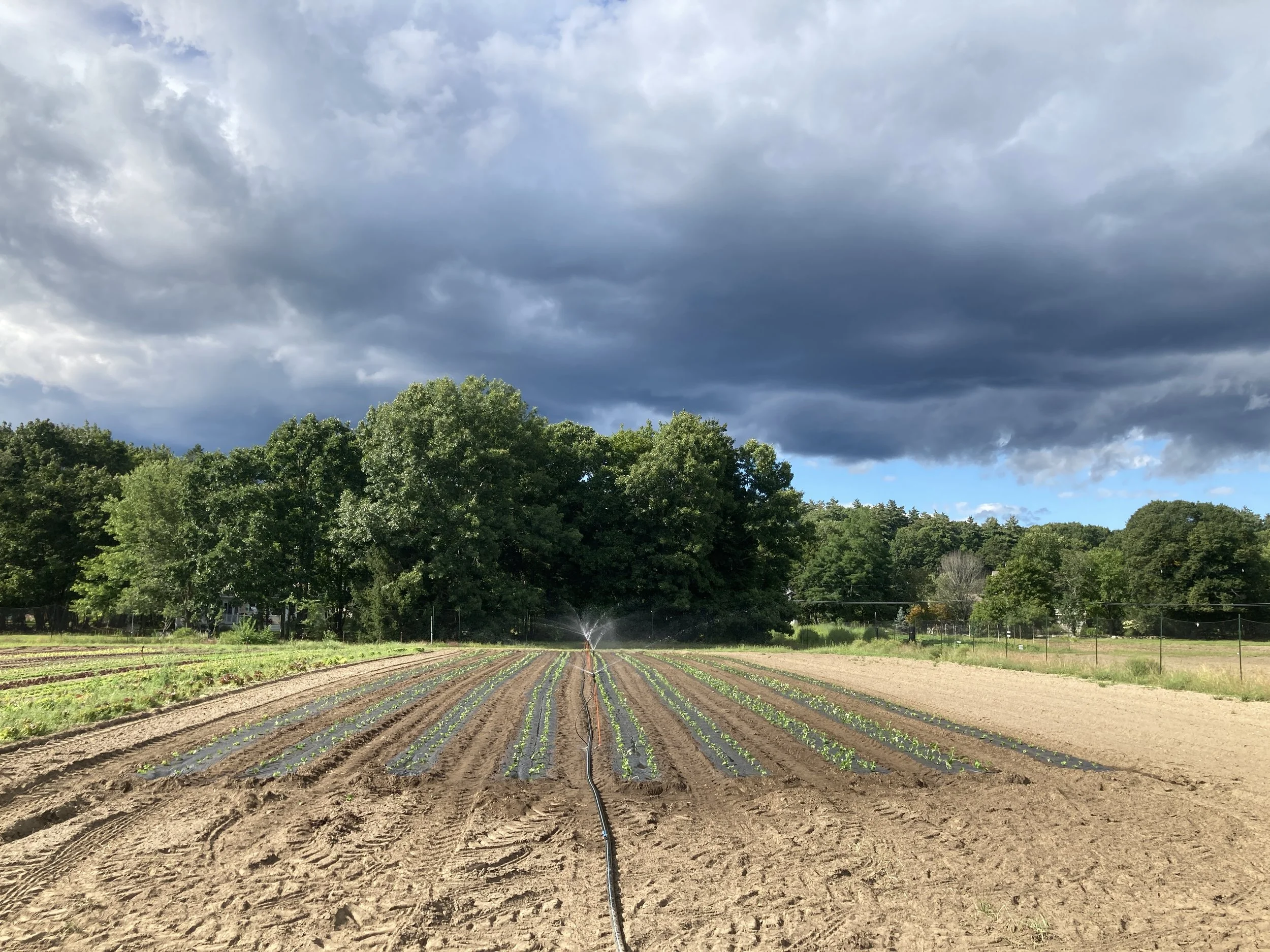
Newly planted strawberries were immediately irrigated!