Snow!

The Col. James Barrett historical house makes for a picturesque neighbor all year long!

The snow held off just long enough for our white barn, currently under renovation, to be ready to house our tractors.  The idling tractors warming up outside made the farm sound like summer for a moment! They are now all inside, protected from the wind and snow to come. We also moved inside our rototiller, the first equipment on our list for winter repairs. Some of our hardier implements remain outside to brave the winter weather until we put them to use again in the spring.  In addition to assessing our equipment needs, we also took the time last week to inventory our irrigation, fencing, and other field supplies. More acres planted in 2015 means the need for more row cover, fence posts, and irrigation capacity. Back in the office we made our lists for field supply orders and carefully examined our crop plan and soil tests to determine our fertilizer requirements. It is much easier to determine fertility needs and application rates during a work day in January than it is at 5am in July! We will be cozy in our office during the snow tomorrow, with the exception of maybe a snowy walk around the farm if the sun comes out. We hope you all have similar plans for a safe and pleasant snow day tomorrow!


Our perfecta and plastic mulch layer.

Winter on the Farm


The days are short and the ground is frozen but it is an important time of year for us on the farm because it gives us the chance to look ahead to what is next. With the previous season still fresh in our minds we can make decisions for the following year without the distraction of time sensitive needs around the farm. Lise and I spent much of December at the computer, surrounded by seed catalogues, going over detailed plans for each crop so that we can hit the ground running when the fields thaw. In addition to finishing our crop plan and seed order last month, we also attended a farm business workshop in Rhode Island, conducted interviews for our Grower’s Assistant position, signed up many returning CSA members and continued cleaning up around the farm.

We enjoy the time and energy winter gives us to plan but a note about the non-planting months would not be complete without mention of our appreciation for the time we get to spend with family and friends. With no greenhouse to water or vegetables to harvest we are able to keep a schedule more conducive to dinners with friends and visits with family. It has been fun to cook, chat, and generally catch our breath after an eventful 10 months!

Happy Thanksgiving!

Thank you to the volunteers from the Boston Area Gleaners who came out to the the farm today to harvest the remainder of our carrots to donate to families in need for Thanksgiving. The Gleaners harvest surplus crops from local farms throughout the season to donate to hunger relief organizations around Boston. They had set a goal of gleaning 10 tons of produce in 10 days for Thanksgiving, which they achieved today (their 9th day)! Nice work!

The past month we've mainly been occupied with putting the farm to bed for the season. The deer fences are down, the strawberries are covered, soil samples have been taken, the cooler has been cleaned out and harvest bins have been scrubbed one last time and put into storage in the greenhouse. We've also had some office time in which we've gotten to catch up on bookkeeping, write our budget for next year, and even begin ordering supplies for next year like our potting soil. In December we're planning to begin one of our biggest winter projects: our crop plan and seed order for next season.

In the meantime, though, we're looking forward to the Thanksgiving holiday and sharing with our families the squash, potatoes and a few other farm veggies we set aside to store for the winter. We hope you all have a wonderful Thanksgiving too!

Week 20 - Thanks for a great season!

Freshly plowed field in early May.
The same field in late October. Some vegetables remain in the ground, but most of the field has been seeded in cover crop once again to protect and build up the soil for next season.

This week marks the end of Barrett's Mill Farm's inaugural season. It's hard to believe that 8 months ago we signed the lease for the McGrath land. Last spring was an especially busy time as we we occupied ourselves not only with signing up members, acquiring equipment and setting up our store, greenhouse, wash area, irrigation and fencing systems, but we also had to carry on with the regular business of growing food! We couldn't be more pleased with how the season turned out, and we are so grateful that we got the opportunity to start our own farm business in this wonderful community. The support from our customers, the Town, family, friends and fellow farmers helped us make it through a challenging spring and ensured a successful 2014 growing season. Thank you! Now we are looking forward to a more restful winter and then many more bountiful seasons to come!

This Tuesday and Thursday are the last CSA pick-ups for the season and Saturday, November 1st is the last day that the store will be open. However, we are now accepting orders for bulk vegetables to be picked up next week. Visit our website or click here for more information.

In the CSA:
  • Brussels sprouts - These are still on the stalk, but you can pull off the sprouts and put in a plastic bag to store in the refrigerator. The sprouts are a little on the small side - we plan to plant them earlier next year!
  • Rutabagas - Can be roasted or mashed like potatoes.
  • Turnips - These have a purple top and white bottom, and unlike the white salad turnips, these should be cooked.
  • Romanesco cauliflower - This lime green pointy cauliflower is unique looking and has a slightly nutty flavor. They have been slow to mature, so members will likely have a choice between either cauliflower or broccoli.
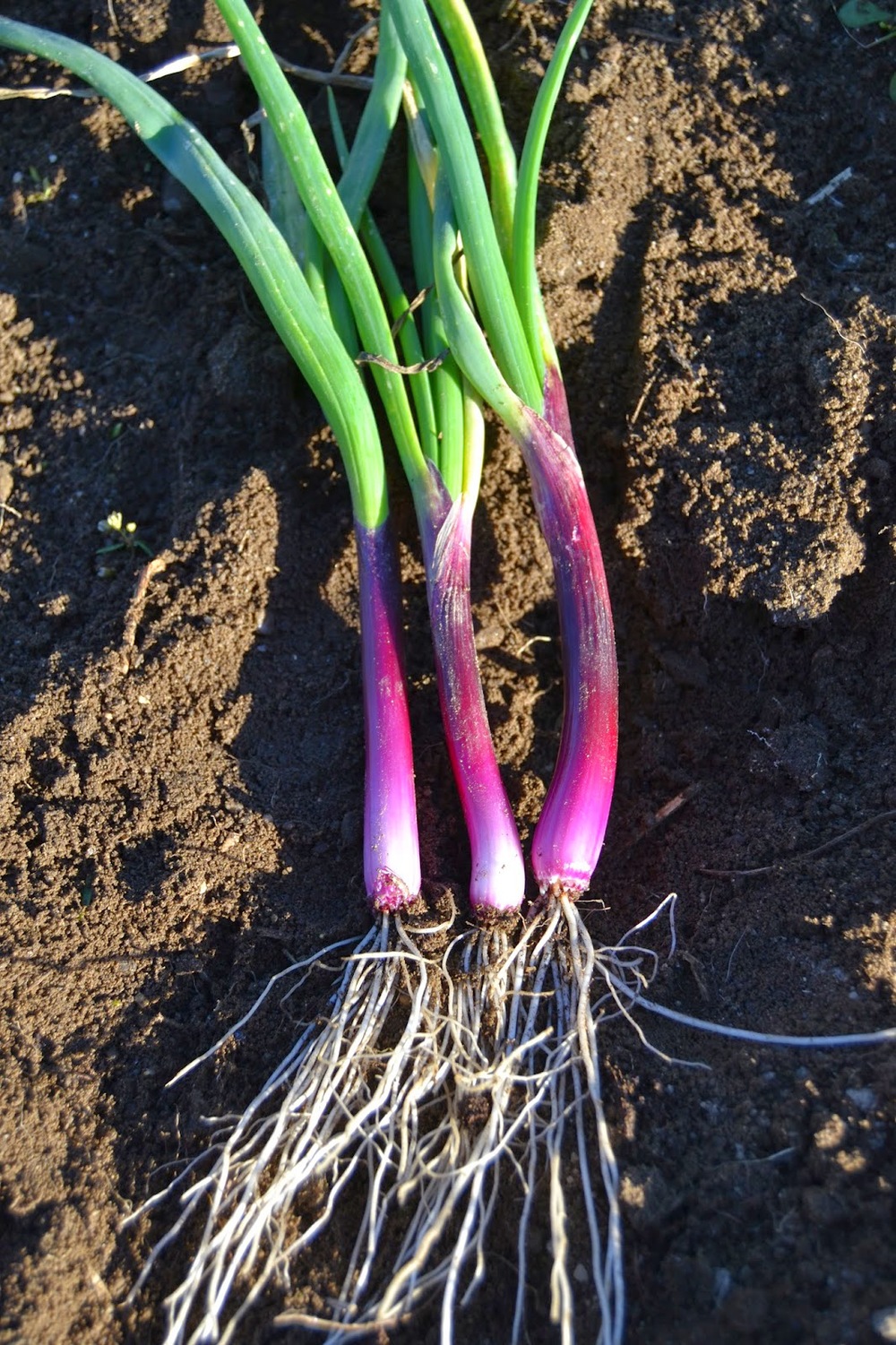
  • Scallions - We'll continue to have the regular white scallions, but we'll also have purple ones this week!
  • Butternut Squash
  • Buttercup Squash
  • Parsnips
  • Celeriac
  • Beets
  • Carrots
  • Potatoes - Red Gold and Elba
  • Cabbage- Green Storage no. 4 and Purple cabbage
  • Daikon radish
  • Fennel 
  • Mustard Greens
  • Tat soi
  • Kale
  • Spinach
  • Lettuce
  • Leeks
CSA Pick-your-own:
  • Herbs: cilantro, parsley, thyme and oregano
In the store:
Everything in the CSA will also be available in the store, as well as Happy Rich mini broccoli, radishes, red Russian kale, and a limited amount of garlic grown by our friends at Alprilla Farm in Essex, MA . In addition, we have Jack-O'-Lanterns grown by Bill Kenney down the road from us.


Roasted Root Vegetables with Rosemary

Bon Appétit  | December 2001 

Ingredients

  • Nonstick vegetable oil spray
  • 1 pound red-skinned potatoes, unpeeled, scrubbed, cut into 1-inch pieces
  • 1 pound celery root (celeriac), peeled, cut into 1-inch pieces
  • 1 pound rutabagas, peeled, cut into 1-inch pieces
  • 1 pound carrots, peeled, cut into 1-inch pieces
  • 1 pound parsnips, peeled, cut into 1-inch pieces
  • 2 onions, cut into 1-inch pieces
  • 2 leeks (white and pale green parts only), cut into 1-inch-thick rounds
  • 2 tablespoons chopped fresh rosemary
  • 1/2 cup olive oil
  • 10 garlic cloves, peeled

Preparation

Position 1 rack in bottom third of oven and 1 rack in center of oven and preheat to 400°F. Spray 2 heavy large baking sheets with nonstick spray. Combine all remaining ingredients except garlic in very large bowl; toss to coat. Season generously with salt and pepper. Divide vegetable mixture between prepared sheets. Place 1 sheet on each oven rack. Roast 30 minutes, stirring occasionally. Reverse positions of baking sheets. Add 5 garlic cloves to each baking sheet

Continue to roast until all vegetables are tender and brown in spots, stirring and turning vegetables occasionally, about 45 minutes longer. (Can be prepared 4 hours ahead. Let stand on baking sheets at room temperature. Rewarm in 450°F oven until heated through, about 15 minutes.)

Transfer roasted vegetables to large bowl and then serve.



Week 19


One of our favorite parts of late October is planting garlic; it is a chance to grow something new at a time that is otherwise focusing on endings. This week we will be planting our garlic crop for the 2015 season! We purchased 3 varieties of organic hardneck garlic seed bulbs that are certified nematode free (nematodes are a soil borne pest that is very common and damaging to a garlic crop). It is important to plant the garlic somewhere that makes sense for the following year because it will be in the ground from now until July. To plant the garlic, we separate the bulbs into cloves and plant each clove 6 inches apart in the ground about 3 inches deep. We then cover the planted garlic beds with straw mulch to help suppress weeds, hold in moisture, and provide protection from the cold. Green growth will be visible next spring and by mid June we will be harvesting garlic scapes, the curly stem and bud that grow from the center of the plant. We harvest the scapes because they are great for eating and because removing them encourages growth in the bulbs. In mid July we pull the entire plant out of the ground.  The garlic is then cured by hanging the bulbs still attached to the plants in a shady dry place with good air circulation for 4-6 weeks.  We then clip the bulbs from the stems for storage. Most of our garlic will be available in the CSA and farm store next fall but some we will save to replant in October for a great garlic crop the following year!


In the CSA:
  • Celeriac- Also known as celery root, celeriac has a great celery flavor and root vegetable texture. Peel or cut the outside of your celeriac and chop the rest for a great addition to roasted vegetables, soups and stews. 
  • Parsnips- Parsnips are a white root vegetable that looks much like a carrot, but unlike carrots should only be eaten when cooked. Chopping and roasting with olive oil and salt is a simple way to enjoy this sweet root vegetable. 
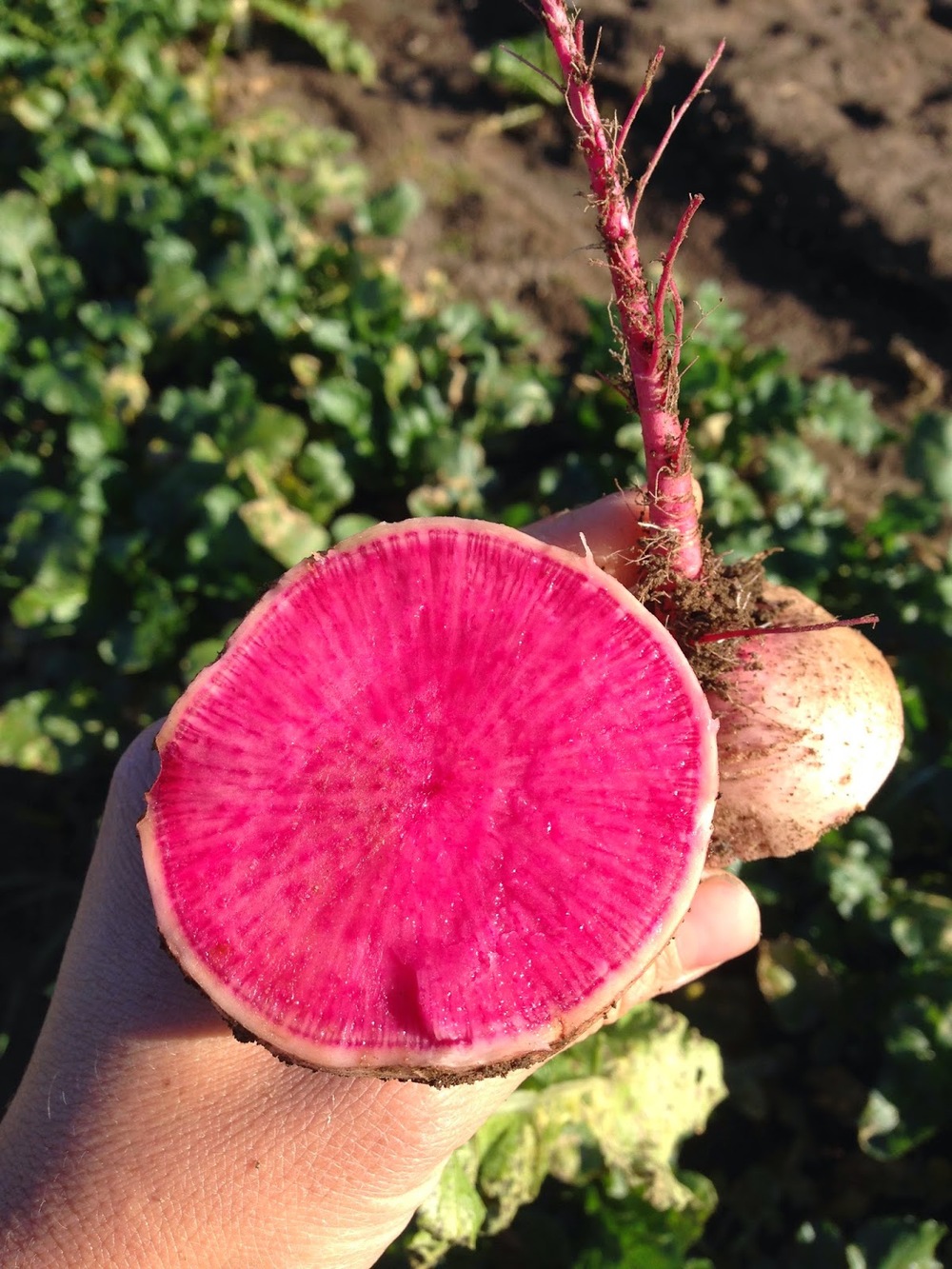
  • Watermelon Radish- Patsy brought us these radishes for the first time a few years ago and we have been growing them ever since! They get their name for their appearance when cut in half. they have a pretty red center with a white exterior. 
  • Cabbage- Green Storage no. 4 and Purple cabbage
  • Fennel 
  • Arugula
  • Mustard Greens
  • Red Russian Kale
  • Baby Bok Choy
  • Daikon radish
  • Butternut Squash- Great for recipes such as soups, stews, and the risotto listed below. They will store well for months so you can look forward to enjoying squash soup on a cold winter night!
  • Buttercup Squash-  We often just slice it up and bake it for a great side dish for any meal.  The skin is edible so don't worry about peeling. 
  • Beets - mixed Chioggia, Red Ace and Golden
  • Carrots
  • Potatoes - Red Gold and Kennebec.
  • Scallions
  • Kale
  • Spinach
  • Lettuce
  • Leeks
CSA Pick-Your-Own:
  • Buttercream Sunflowers
  • Herbs: Cilantro, Parsley, Thyme and Oregano

In the store:
Everything in the CSA will also be available in the store, as well as pie pumpkins, red kuri squash, acorn squash, and sugar dumplings. Happy Rich mini broccoli, salanova, radishes, salad turnips, and sweet peppers will also be available. In addition, we have Jack-O'-Lanterns grown by Bill Kenney down the road from us.


Thanks to Carmela, a store regular, we have this great recipe for a risotto without all the stirring!

Baked Barley Risotto With Butternut Squash

From: Real Simple December 2011

Ingredients

2 
tablespoons 
olive oil 
1 
small butternut squash (about 11/2 pounds)—peeled, seeded, and cut into 1-inch pieces (about 3 cups) 
1 
onion, finely chopped 
kosher salt and black pepper 
1 
cup 
pearl barley 
1/2 
cup 
dry white wine 
3 
cups 
low-sodium vegetable broth 
5 
ounces 
baby spinach 
1/2 
cup 
grated Parmesan (2 ounces), plus more for serving 
1 
tablespoon 
unsalted butter 

Directions

  1. Heat oven to 400° F. Heat the oil in a Dutch oven or large oven-safe saucepan over medium-high heat. Add the squash, onion, ¾ teaspoon salt, and ¼ teaspoon pepper and cook, stirring often, until the onion begins to soften, 4 to 6 minutes.
  2. Add the barley to the vegetables and cook, stirring, for 1 minute. Add the wine and cook, stirring, until evaporated, about 1 minute. Add the broth and bring to a boil; cover the pot and transfer it to oven. Bake until the barley is tender, 35 to 40 minutes.
  3. Stir in the spinach, Parmesan, and butter. Serve with additional Parmesan.

 Sarah Copeland 
November 2011